Accurately judging distance is one of the most important skills in hunting. Whether you're using a rifle or a bow, even a small miscalculation can lead to a missed shot — or worse, an unethical one.
Many hunters, especially beginners, rely on instinct or experience to estimate distance. But in reality, distance perception is far less reliable than most people think.
Common Ways Hunters Estimate Distance
Over time, hunters develop their own ways of judging distance in the field. Some of the most common methods include:
1. Visual estimation
This is the most basic method — simply looking at the target and making a judgment based on experience. While it may work in familiar environments, it can be highly inconsistent.
2. Using landmarks
Some hunters use trees, rocks, or terrain features as reference points. For example, if you know a certain tree is about 100 yards away, you can estimate distance based on that.
3. Step counting or pacing
In some cases, hunters may walk and count steps to measure distance beforehand, especially when setting up in a fixed location.
These methods can be helpful, but they all share one major flaw: they rely heavily on human perception.
Why Distance Estimation Often Fails
In real hunting situations, conditions are rarely ideal. Several factors can distort your sense of distance:
- Lighting conditions – Low light during early morning or late evening can make objects appear farther away.
- Terrain changes – Uphill or downhill angles can significantly affect how distance is perceived.
- Background and contrast – Targets in open fields look closer, while those in dense woods may seem farther.
- Adrenaline – In the moment of a shot opportunity, your perception can become less reliable.
Because of these variables, even experienced hunters can misjudge distance more often than they realize.

The Problem With “Close Enough”
Many hunters believe being “close enough” is good enough. But in reality, small errors matter.
For example:
- A 20-yard misjudgment can significantly affect bullet drop
- In bow hunting, even a few yards can make the difference between a clean hit and a miss
More importantly, inaccurate distance estimation can lead to poor shot placement, which raises ethical concerns.
A More Reliable Approach
To improve consistency, many hunters choose to rely on tools rather than guesswork.
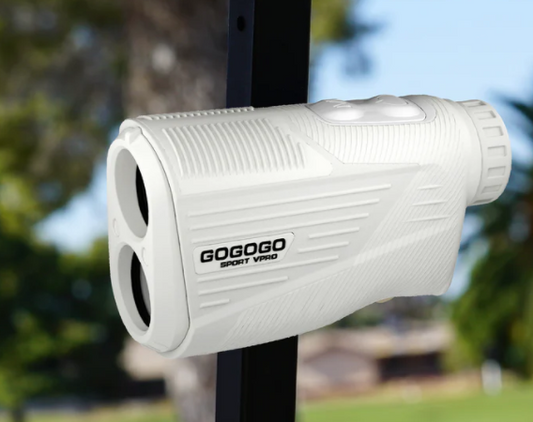
A rangefinder provides fast, accurate distance measurements in real time, helping eliminate uncertainty in the field. Instead of relying on changing environmental factors or subjective judgment, you get a clear, objective number.
This becomes especially valuable in situations where:
- Lighting is low
- Terrain is uneven
- Targets appear suddenly
Having a reliable way to measure distance allows hunters to make quicker and more confident decisions.
Final Thoughts
Estimating distance is a skill — but it’s not a perfect one. Even experienced hunters can get it wrong under real-world conditions.
Accurate distance isn’t just about hitting your target — it’s about making responsible and ethical decisions in the field. That’s why having a reliable way to measure distance can make all the difference.